

Start With the Decision in Front of You
When your Tower Garden pump malfunctions, a critical decision arises: replace it with an original equipment manufacturer (OEM) pump or opt for a compatible third-party hydroponic pump? This choice impacts not only the immediate cost but also long-term reliability and system performance. This article will guide you through the key factors and trade-offs to consider, helping you determine which replacement route best fits your needs and priorities.
What Actually Changes the Choice
The decision between an OEM and a compatible third-party pump for your Tower Garden is primarily driven by a few core criteria: pump specifications, reliability expectations, and availability.
All replacement pumps, regardless of origin, must meet specific technical requirements to ensure proper water circulation in your Tower Garden. For most home Tower Gardens, this typically means a pump with a flow rate of 350-400 Gallons Per Hour (GPH), a head height rating of 5-7 feet, and power consumption between 20-35 watts. Head height, the maximum vertical distance a pump can push water, is particularly crucial for multi-tiered systems like the Tower Garden. It is advisable to select a pump with a maximum head height at least 25-30% higher than the actual required vertical distance to ensure strong flow.
OEM pumps are available directly from Tower Garden, with models such as the Flex or Home Edition pumps offered as replacements. These are designed for guaranteed compatibility and fit. Compatible third-party pumps, on the other hand, offer a wider market of options. Some third-party brands, like Sicce, are noted for their reliability in aeroponic towers. The physical dimensions of any replacement pump are also important to ensure it fits within the Tower Garden system.
Quick Decision Checklist
Review these essential checks before considering a pump replacement. A ‘No’ answer on a critical point may indicate a different problem or an unsuitable replacement option.
- Is the pump receiving power and are connections secure? If no, troubleshoot power supply or timer.
- Have you cleaned the pump for clogs (roots, debris)? If no, clean the pump cover and screen thoroughly.
- Does the replacement pump meet the required flow rate (350-400 GPH for home Tower Gardens)? If no, it may not circulate water adequately.
- Does the replacement pump meet the required head height (5-7 feet, plus 25-30% buffer)? If no, water may not reach the top of your Tower Garden.
- Does the replacement pump physically fit within the Tower Garden reservoir? If no, it is incompatible.
A failed must-have check should end the decision early, either by resolving a troubleshooting issue or by eliminating an incompatible pump option.
This checklist assumes the pump is the source of the problem and does not cover all potential system malfunctions. Specific GPH and head height requirements are based on general home Tower Garden needs.
Where Each Approach Fits
Choosing between an OEM and a compatible third-party pump involves weighing their respective advantages and disadvantages against your specific priorities.
OEM Pump Fit
An OEM pump is often the best fit if:
- You prioritize guaranteed compatibility and ease of selection. OEM pumps are designed specifically for Tower Garden systems, ensuring a precise fit and expected performance without needing to cross-reference specifications.
- You seek direct support and warranty coverage from the system manufacturer. Opting for an OEM part can simplify troubleshooting and warranty claims, as you are dealing with a single vendor for your system and its components.
- You prefer a straightforward replacement process. The installation of an OEM pump is typically identical to the original, reducing potential complexities.
However, OEM pumps may come at a higher price point compared to some third-party alternatives, and the selection might be limited to a few models.
Compatible Third-Party Pump Fit
A compatible third-party pump may be a better fit if:
- You are looking for potential cost savings. The broader market for third-party pumps can offer more competitive pricing options.
- You want to explore pumps with specific features or enhanced performance. The third-party market provides a wider range of pumps, some of which might offer different power consumption, noise levels, or durability features. For example, Sicce pumps are noted for their reliability.
- You are comfortable verifying technical specifications. To ensure a third-party pump works, you must carefully match its flow rate, head height, and physical dimensions to your Tower Garden’s requirements. Incorrect sizing, especially insufficient head height, can be a factor in inadequate water circulation.
The main trade-off with third-party options is the responsibility to ensure compatibility. Without careful verification, an ill-fitting or underperforming pump can lead to system issues.
Buying Criteria Matrix
Compare the characteristics of OEM and third-party pumps against your primary decision criteria to see which option aligns best with your priorities.
| Criterion | OEM Pump | Compatible Third-Party Pump |
|---|---|---|
| Guaranteed Compatibility | High; designed for Tower Garden systems. | Requires careful verification of specifications and physical fit. |
| Availability | Directly from Tower Garden. | Wide market availability from various suppliers. |
| Performance (GPH/Head Height) | Meets standard Tower Garden requirements. | Varies by model; must match Tower Garden specifications. |
| Reliability | Expected reliability as a manufacturer-approved component. | Varies by brand; some brands like Sicce are noted for reliability. |
| Cost | Generally consistent, potentially higher. | Potential for varied costs, including lower-priced options. |
| Warranty & Support | Direct from Tower Garden (may vary by policy). | Varies by manufacturer; separate from Tower Garden support. |
Criteria and constraints should drive the choice before brand or price. Prioritize guaranteed fit and support with OEM, or seek specific features and potential cost savings with third-party options.
This matrix highlights general characteristics. Specific costs, warranty details, and detailed performance metrics for individual pump models (OEM vs. third-party) are not provided in the available evidence and may vary.
Check Before You Commit
Before making a final commitment to either an OEM or a compatible third-party pump, perform these essential checks:
- Initial Troubleshooting: Before purchasing any replacement, ensure the issue is indeed the pump. Check for common problems such as clogs from plant roots or debris, which can jam the pump. Verify the power supply and wiring connections, as electrical issues are common factors in pump failures. Also, check for air locks or dry running, which can prevent submersible pumps from circulating water.
- Verify Specifications: If troubleshooting confirms the pump needs replacement, meticulously compare the specifications of any prospective pump against your Tower Garden’s requirements. This includes:
- Flow Rate (GPH/LPH): Ensure it matches or slightly exceeds the 350-400 GPH typically needed for home Tower Gardens.
- Head Height: Confirm the pump’s maximum head height is sufficient to push water to the top of your system, ideally 25-30% higher than the actual vertical distance.
- Power Consumption (Watts): While less critical for performance, it impacts energy use.
- Physical Dimensions: Measure the space available in your Tower Garden reservoir to ensure the replacement pump fits without obstruction.
Failing to verify these specifications, especially head height, can lead to inadequate water circulation and poor plant growth.
Buyer Decision Tree
Follow the path that matches your pump’s current status and your priorities to guide your replacement decision.
- Is your Tower Garden pump not working or performing poorly?
- No: No replacement needed.
- Yes: Proceed to step 2.
- Is the pump receiving power from the outlet and timer?
- No: Check power supply, timer, and wiring connections. If fixed, stop. If not, consult an electrician.
- Yes: Proceed to step 3.
- Is the pump clean and free of root debris or mineral clogs?
- No: Unplug, remove, clean pump cover and screen, flush with water. If fixed, stop.
- Yes: Proceed to step 4.
- Is the pump still failing after troubleshooting and cleaning?
- No: Pump fixed.
- Yes: Consider pump replacement. Proceed to step 5.
- Do you prioritize guaranteed compatibility, direct manufacturer support, and a straightforward replacement?
- Yes: Consider an OEM Tower Garden pump. Verify current model requirements.
- No: Consider a compatible third-party hydroponic pump. Proceed to step 6.
- Are you comfortable verifying technical specifications (GPH, head height, physical fit) and comparing different brands for performance and reliability?
- Yes: Research third-party pumps that meet 350-400 GPH and 5-7 ft head height. Verify physical dimensions.
- No: Reconsider an OEM pump for simpler selection.
A short decision path prevents feature overload by guiding you through troubleshooting before committing to a replacement type.
This tree assumes a single pump failure and does not cover complex system-wide issues. Specific diagnostic steps for ‘motor wear’ are not detailed in the provided evidence. Direct cost or warranty comparisons are not included.
Recommended Products


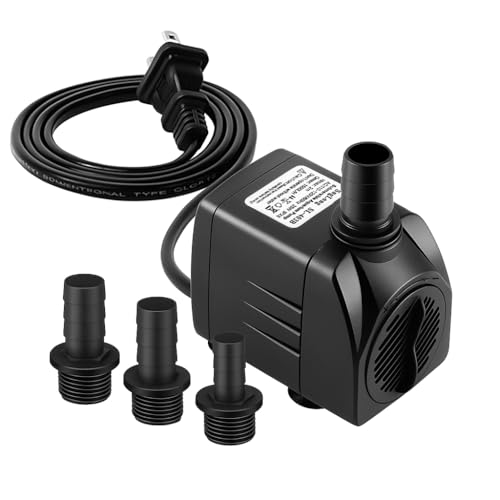
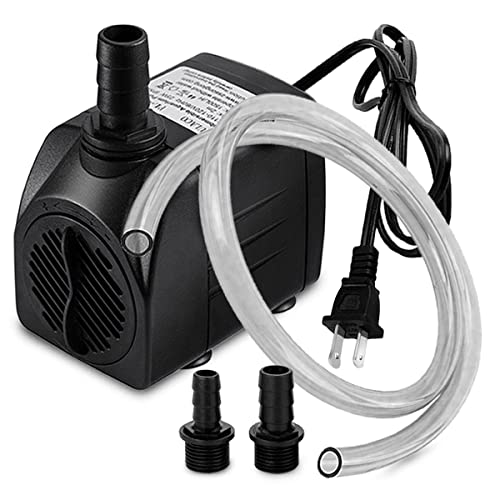
As an Amazon Associate, we may earn from qualifying purchases.
Final Verdict
When your Tower Garden pump requires replacement, the choice between an OEM pump and a compatible third-party option hinges on your priorities. If you value guaranteed compatibility, direct manufacturer support, and a simple, known replacement process, an OEM pump from Tower Garden is often the more suitable route. However, if you are prepared to meticulously verify technical specifications such as flow rate (350-400 GPH) and head height (5-7 feet, plus a buffer), and prioritize potential cost savings or specific performance characteristics, a reliable third-party pump, like those from Sicce, can be a viable alternative. Always conduct thorough troubleshooting for clogs or electrical issues first and confirm all critical specifications before committing to a purchase.
Frequently Asked Questions
What are the most common reasons a Tower Garden pump stops working?
Pump issues in hydroponic systems frequently stem from clogs, such as plant roots jamming the pump or general debris accumulation. Electrical problems, including issues with the power supply or wiring connections, are also common causes of pump failures. Additionally, air locks or dry running can prevent a submersible pump from circulating water.
How can I troubleshoot my Tower Garden pump before deciding to replace it?
Troubleshooting steps typically involve unplugging the pump, removing it from the reservoir, thoroughly cleaning the pump cover and screen, and flushing it with water to clear any clogs. You should also check the power supply and inspect all wiring connections for faults. Ensuring the pump is fully submerged and free of air locks is also important.
Are there specific technical specifications I must match when choosing a replacement pump?
Yes, critical specifications include the flow rate (GPH/LPH), head height (or maximum head), and power consumption. For most home Tower Gardens, a pump delivering 350-400 GPH with a head height rating of 5-7 feet and 20-35 watts of power is commonly recommended. It is also advisable to choose a pump with a maximum head height at least 25-30% higher than the actual required vertical distance to ensure strong flow. Physical dimensions are also crucial for proper fit within the system.
Sources & Audit Basis
The Editorial Desk’s reader-facing audit basis for this article contains 10 sources: 4 community / forum / social, and 6 other / unclassified. This summary is generated only from the sources listed above; it does not name or count sources that are absent from the visible list. The complete internal ResearchPack may contain additional evidence used during research.

Built on a foundation of professional controlled-environment agriculture data, the GrowersReview Editorial Desk leads our technical system audits. Our focus is on bridging the gap between complex engineering specifications and the everyday home cultivator, ensuring every recommendation is backed by cross-referenced forum feedback, manufacturer datasheets, and real-world yield metrics.